


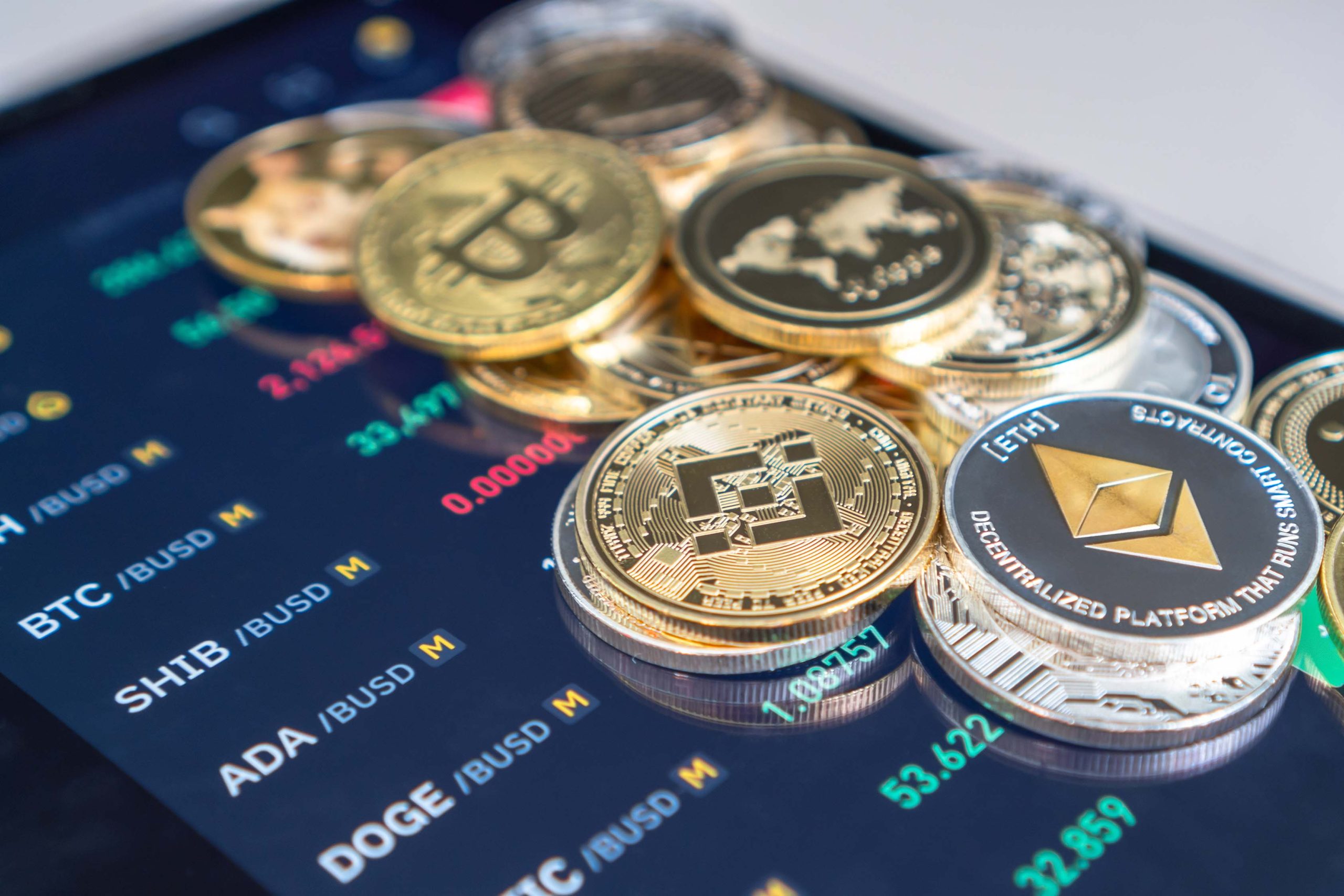
Decentralized Finance, or DeFi, remains one of the most talked-about innovations to disrupt the world of finance. But what exactly is it, and why is it making waves? Is DeFi really going to disrupt the future of traditional finance? Let’s break it down into simple terms.
The Basics of Decentralized Finance
At its core, DeFi refers to a financial ecosystem built on blockchain technology that operates without the need for traditional intermediaries like banks or payment processors. Instead of relying on a centralized authority, DeFi uses smart contracts—self-executing agreements coded on a blockchain—to handle transactions and agreements.
Imagine being able to borrow money, earn interest, or trade assets without needing to visit a bank or deal with a pile of paperwork before you can access your hard-earned funds. That’s the power of decentralized finance.
It’s all about an open and permissionless financial system that is accessible to anyone with an internet connection.
This doesn’t go without saying. Decentralized Finance comprises certain fundamental components that make it distinct from traditional financial systems. Some of the key components of DeFi include:
1. Blockchain Technology: The backbone of DeFi, ensuring transparency and immutability.
2. Smart Contracts: Automated programs that execute transactions when specific conditions are met.
3. Decentralized Applications (dApps): User-friendly interfaces that make interacting with DeFi services easier.
For example, platforms like Aave and Uniswap allow users to lend, borrow, and trade cryptocurrencies without a central authority. This means you’re in full control of your assets at all times.
How Decentralized Finance Differs from Traditional Banking
To truly understand DeFi, it’s essential to compare it with the traditional banking system most of us are familiar with. In traditional finance, banks and financial institutions act as intermediaries. They control your access to money, charge fees for their services, and often have lots of requirements for loans or credit. While this system has worked for centuries, it comes with limitations like high costs, lack of transparency, and restricted access for the unbanked population. Decentralized finance flips this model on its head. Here’s how:
1. Decentralization: Unlike banks, DeFi platforms operate on decentralized networks, meaning no single entity has control.
2. Permissionless Access: Anyone can use DeFi services without needing approval or documentation from intermediaries .
3. Global Reach: DeFi platforms are accessible 24/7, from anywhere in the world. All you need is a good internet connection.
Let me make you grasp the concept well enough. While transferring money internationally through a bank might take days and incur significant fees, a DeFi platform like MakerDAO can facilitate the same transaction within minutes at a fraction of the cost.
Standout Features of Decentralized Finance That are Disrupting Banking Systems
Transparency and Accessibility
One of the most significant advantages of DeFi shaking up banking systems is its commitment to transparency and accessibility.
Unlike traditional banks, where operations are often hidden behind closed doors, DeFi platforms operate on public blockchains. This means every transaction is visible to anyone, ensuring accountability and reducing the risk of fraud.
But transparency isn’t the only perk. Accessibility is where DeFi truly shines. Traditional banking often excludes people without proper identification, credit history, or access to physical bank branches. DeFi eliminates these barriers. All you need is an internet connection and a digital wallet to participate.
Platforms like Compound and Yearn Finance enable users to earn interest on their crypto holdings without needing to meet the strict requirements of traditional savings accounts. This opens doors for the unbanked and underbanked populations worldwide.
Cost Reduction Through Smart Contracts
Traditional financial services come with layers of intermediaries all of which charge fees. These costs are passed down to consumers, whether it’s in the form of wire transfer fees, credit card processing charges, or loan origination costs. Decentralized finance removes these intermediaries by using smart contracts, which are self-executing programs that automatically enforce agreements when specific conditions are met. These contracts operate on blockchain networks, cutting out the middlemen and significantly reducing costs.
For instance, if you take out a loan through a DeFi platform like Aave, the terms are set in a smart contract. Once you meet the repayment conditions, the contract automatically releases your collateral. There’s no need for a loan officer, no paperwork, and no extra fees.
This cost efficiency makes DeFi a compelling alternative for cross-border payments, lending, and even insurance, where traditional systems are often bogged down by high operational costs.
Borderless Transactions and Global Reach
In traditional banking, international transactions can be slow, expensive, and riddled with loads of downtime. Think about the time it takes for a wire transfer to clear or the fees you incur when exchanging currencies. Decentralized finance changes this by enabling fast, borderless transactions.
Using blockchain technology, DeFi platforms allow users to send and receive money anywhere in the world within minutes. Cryptocurrencies like stablecoins (e.g., USDT) further simplify cross-border payments by eliminating currency conversion issues.
For example, a freelancer in Africa can receive payment in stablecoins from a client in the United States without worrying about exchange rates or high remittance fees. Platforms like Stellar and Ripple are leading the charge in this space. This again proves that financial services can be global and inclusive– with decentralized finance.
The Impact of Decentralized Finance on Global Banking
Democratizing Financial Services
One of the most profound impacts of DeFi is its ability to democratize access to financial services. In the traditional banking system, millions of people remain unbanked or underbanked due to barriers like lack of identification, poor credit history, or geographic limitations. DeFi removes these barriers by providing open access to anyone with an internet connection.
For example, DeFi lending platforms like Aave and MakerDAO allow users to borrow funds without relying on traditional credit scores. Instead, loans are secured using cryptocurrency as collateral. This peer-to-peer lending model empowers individuals who would otherwise be excluded from financial opportunities.
In addition, DeFi platforms often operate 24/7, unlike banks with limited hours. This round-the-clock accessibility is particularly beneficial for individuals in remote or underserved regions.
Revolutionizing Remittances
Remittances are a lifeline for millions of families worldwide, but with traditional remittance services often come limitations such as high fees and long processing times. DeFi is challenging the status quo by offering faster, cheaper, and more transparent solutions.
With DeFi, individuals can send money across borders in minutes, often at a fraction of the cost charged by banks or money transfer services. Platforms like Stellar and Celo are leading the way in providing low-cost remittance solutions.
For example, a worker in the United States can use a DeFi platform to send stablecoins like USDC to their family in anywhere in the world. The recipient can then convert the stablecoins to local currency using a crypto exchange or wallet app, bypassing the need for traditional remittance services.
This efficiency not only saves money but also ensures that funds reach recipients faster, making a significant difference for families relying on these transfers for daily expenses.
Enhancing Security and Privacy
In traditional banking, customers entrust their funds and personal information to centralized institutions, which can be vulnerable to data breaches and fraud. This is not to say DeFi platforms can not be infiltrated by hackers but it offers a more secure alternative by leveraging blockchain technology and cryptographic principles.
Transactions on DeFi platforms are secured through encryption and recorded on an immutable ledger, making them tamper-proof. Additionally, DeFi users retain control of their assets through private keys, and this eliminates the risk of a centralized institution mismanaging funds.
Privacy is another area where DeFi excels. In contrast traditional banking, which often requires extensive personal information for transactions, DeFi platforms enable users to remain pseudonymous. This is especially valuable in regions where financial privacy is at risk.
It’s worth noting that the security of DeFi platforms depends on the robustness of their smart contracts. While the technology is promising, users should exercise caution and research platforms before investing.
Challenges Facing DeFi in Global Banking
While DeFi holds immense potential to revolutionize global banking, it’s not without its challenges.
Regulatory Uncertainty
One of the biggest challenges DeFi faces is the lack of clear regulatory frameworks. Traditional financial institutions operate under strict regulations that ensure consumer protection, prevent fraud, and maintain stability. DeFi, being decentralized and borderless, doesn’t fit neatly into existing legal frameworks.
Governments and regulators worldwide are still grappling with how to oversee DeFi platforms. Some countries, like the United States, are introducing regulations that could stifle innovation, while others, like El Salvador, are embracing crypto-friendly policies.
This uncertainty poses a risk for DeFi users and developers. Without clear rules, DeFi platforms could face sudden bans, fines, or operational restrictions, making it difficult for the industry to grow sustainably. For DeFi to thrive, regulators must strike a balance between innovation and ensuring consumer protection.
Scalability and Technical Limitations
DeFi platforms, particularly those built on Ethereum, have faced significant scalability issues. During periods of high demand, network congestion can lead to slow transaction times and exorbitant gas fees. This was evident during the 2021 NFT boom, where users paid hundreds of dollars in fees for simple transactions.
While Ethereum’s transition to Proof-of-Stake (Ethereum 2.0) and the emergence of Layer 2 solutions like Polygon and Optimism aim to address these issues, scalability remains a critical challenge. Competing blockchains like Solana and Binance Smart Chain offer faster and cheaper alternatives, but they often sacrifice some level of decentralization.
For DeFi to compete with traditional banking systems, it must overcome these technical limitations and provide a seamless, cost-effective user experience.
Security Risks and Vulnerabilities
While DeFi offers enhanced transparency and control, it’s not immune to security risks. Smart contract bugs, phishing attacks, and rug pulls (where developers abandon a project after collecting user funds) are common threats in the DeFi space.
For instance, the 2022 Wormhole exploit resulted in a $320 million loss due to a vulnerability in the protocol. Such incidents highlight the importance of thorough audits and robust security measures. Additionally, because DeFi operates without intermediaries, users bear full responsibility for managing their private keys. Losing access to a private key means losing access to funds, which can be daunting for newcomers.
Addressing these security concerns requires better education for users, more rigorous smart contract audits, and the development of insurance solutions to protect against losses.
The Future of Decentralized Finance in Global Banking
Integration with Traditional Banking
While DeFi is often seen as a disruptor to traditional banking, the future may involve more collaboration than competition. Banks are beginning to recognize the benefits of blockchain technology and are exploring ways to integrate DeFi into their existing systems.
To put into perspective, some banks are adopting tokenized assets and decentralized lending protocols to enhance their services. Imagine a scenario where you can use a DeFi platform directly through your bank’s app to access loans, earn interest, or trade digital assets. This hybrid model could combine the trust and stability of traditional banks with the efficiency and accessibility of DeFi.
JP Morgan’s exploration of blockchain-based payments and Citibank’s investment in crypto infrastructure highlight how financial institutions are positioning themselves to leverage DeFi. Such integrations could pave the way for a more inclusive and innovative financial ecosystem.
AI in Decentralized Finance: A Powerful Combination
The integration of Artificial Intelligence (AI) with DeFi is another exciting frontier. AI can enhance DeFi platforms by optimizing smart contract execution, improving risk management, and providing personalized financial advice.
For context, AI algorithms could analyze market trends to help users make informed investment decisions or detect suspicious activities to prevent fraud. Additionally, AI-powered chatbots could make DeFi platforms more user-friendly by guiding new users through complex processes.
Imagine a DeFi platform that not only automates financial services but also offers AI-driven insights tailored to your financial goals. This combination of technologies could make DeFi more accessible and efficient, accelerating its adoption in the near future.
Final Thoughts
The future of decentralized finance lies in collaboration—between developers, traditional financial institutions, and regulators. As banks integrate blockchain technology and DeFi platforms become more user-friendly, the lines between traditional and decentralized finance will blur.
Emerging technologies like Artificial Intelligence and the Internet of Things could further enhance DeFi’s capabilities, making it an integral part of the global financial ecosystem. DeFi is not just an alternative to traditional banking—it’s a revolution. While challenges remain, its potential to create a fairer, more accessible financial system is undeniable. As we look ahead, it’s clear that DeFi will play a pivotal role in shaping the future of finance. The journey has just begun, and the possibilities are limitless.
FAQs: How to Get Started with DeFi
1. What is the best wallet for beginners in DeFi?
For beginners, MetaMask and Trust Wallet are great options due to their user-friendly interfaces and compatibility with most DeFi platforms. Both offer strong security and easy access to decentralized applications (dApps).
2. Which DeFi platforms are the most trusted?
Some of the most trusted DeFi platforms include Aave, Uniswap, and MakerDAO. These platforms have established reputations and offer secure, transparent services for lending, trading, and borrowing.
3. How volatile are crypto markets in DeFi?
Crypto markets can be highly volatile, leading to significant price fluctuations in DeFi assets. It’s essential to understand the risks involved and only invest what you can afford to lose.
4. Why is it important to do your own research (DYOR) in DeFi?
Doing your own research (DYOR) is crucial in DeFi to avoid scams and risky investments. With many projects emerging, independent research helps you assess the credibility and potential of a platform or token.
5. How can I ensure my DeFi investments are secure?
To ensure security, always use reputable wallets and platforms, enable two-factor authentication (2FA), and store private keys safely. Regularly check for platform audits and avoid sharing sensitive information.
