


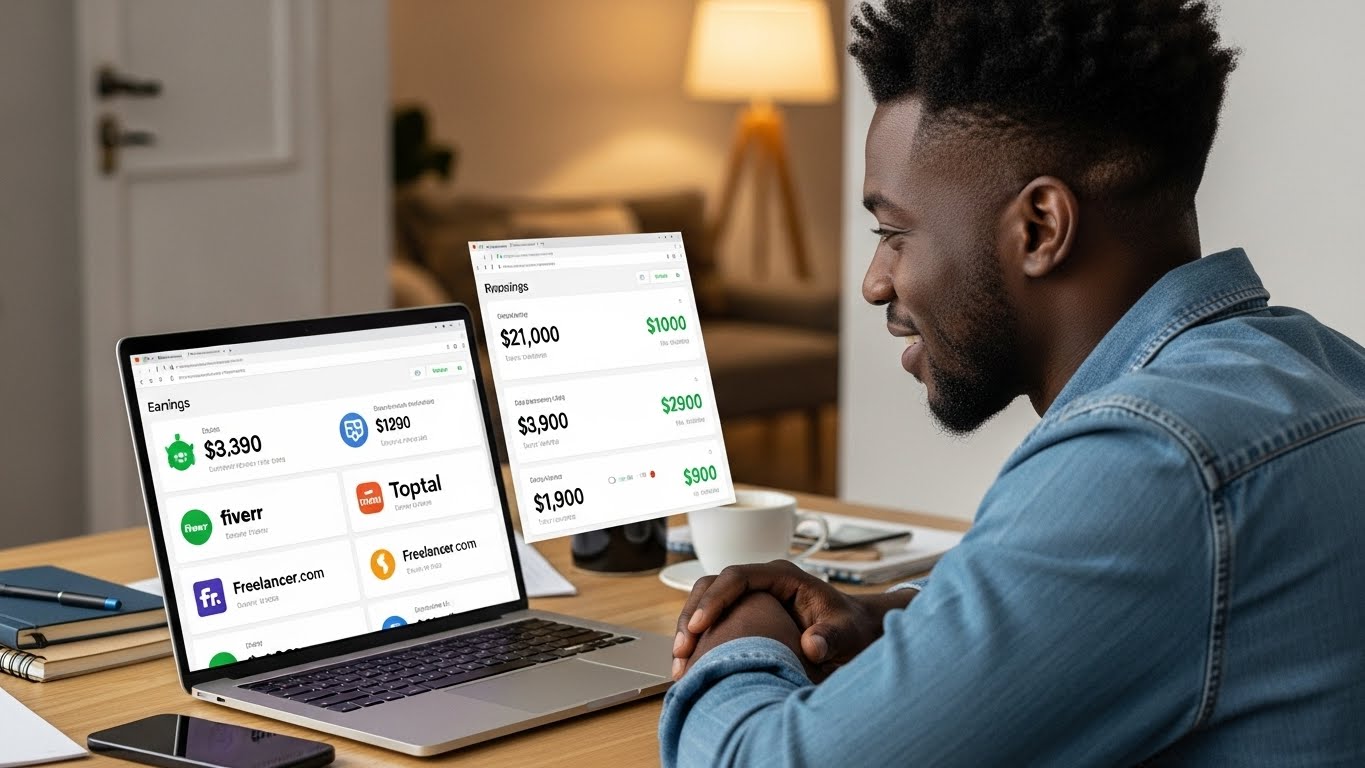
The global shift to remote work has opened up countless opportunities for skilled Nigerians to earn in dollars without leaving home. While everyone else is crowding onto the same one or two platforms, smart freelancers are diversifying across multiple dollar-earning platforms for Nigerians that actually welcome your participation, offer fair pay, and provide reliable payment methods that work in Nigeria.
If you’ve ever tried creating an Upwork account as a Nigerian freelancer, you know the frustration all too well. Your profile can sit in limbo for weeks waiting for approval, or worse, gets rejected without clear explanation. Even when you finally get in, you’re competing with millions of other freelancers, many willing to work for rates that barely cover your data costs. And let’s not even talk about the payment withdrawal headaches that follow.
With the naira’s exchange rate fluctuations, earning just $500 monthly can significantly impact your financial reality. That’s not a pipe dream. It’s exactly what thousands of Nigerian freelancers are already doing on platforms you’ve probably never heard of.
See also: How to land remote tech jobs
Why Nigerian Freelancers Need Alternative Platforms to Upwork
Upwork has become increasingly difficult for Nigerian freelancers to navigate, and putting all your eggs in that one basket is a risky strategy.
- The Account Approval Nightmare
Many Nigerians report waiting weeks or even months for profile approval on Upwork, only to receive vague rejection emails. The platform’s stringent verification process, which includes video identification and portfolio scrutiny, seems to have an invisible bias that affects users from certain countries, including Nigeria. Even experienced professionals with solid portfolios face these barriers, wasting precious time that could be spent earning.
- Overwhelming Competition and Race to the Bottom
With over 12 million freelancers on Upwork, the competition is brutal. You’re not just competing with other Nigerians; you’re up against freelancers from countries with lower living costs who can afford to bid ridiculously low rates. This creates a race to the bottom where you might need to charge $5 per hour just to get your foot in the door, which hardly makes sense when you factor in Nigeria’s internet costs and power supply challenges.
- Payment Processing Headaches
While Upwork claims to support global freelancers, the payment reality for Nigerians tells a different story. Withdrawal options are limited, fees eat into your earnings, and transfer delays can be frustrating when you’re counting on that money to pay bills. Some payment methods that work seamlessly for freelancers in other countries simply aren’t available to Nigerians.
- The Diversification Advantage
Here’s what successful freelancers understand: relying on a single platform is like having a job with only one client. If that platform changes its policies, bans your account (which happens more often than you’d think), or becomes oversaturated in your niche, your entire income disappears overnight.
Diversifying across multiple dollar earning platforms for Nigerians gives you stability, leverage, and options. When one platform is slow, another might be booming. You can negotiate better rates when you’re not desperate for every single project. And you build a broader client base that follows you beyond any single platform.
- The Global Remote Work Boom
The pandemic accelerated a shift that’s here to stay: companies worldwide now actively seek remote talent. This means more platforms are emerging, and existing ones are improving their services to attract quality freelancers. For skilled Nigerians, this is your moment. The demand for remote workers has never been higher, and you don’t need to limit yourself to the platforms everyone else is using.
See also: Freelancing as a Virtual Assistance
Top Dollar-Earning Platforms for Nigerians
Now let’s look at the dollar-earning platforms for Nigerians that are actually working for freelancers. Each of these has been tested by Nigerians who are actively earning and withdrawing dollars without the frustrations you’d face on Upwork.
1. Toptal: Premium Platform for Expert Freelancers
If you’re highly skilled in your field, Toptal might be your golden ticket to premium dollar rates. This platform positions itself as the home of the “top 3% of freelance talent” worldwide, which means they’re extremely selective, but also means clients pay top dollar.
Unlike Upwork, Toptal doesn’t discriminate based on location. If you pass their rigorous screening process, you’re in, whether you’re in Lagos, Abuja, or Calabar. Nigerian developers, designers, and finance experts have successfully joined and are earning rates that would make your Upwork earnings look like pocket change.
Toptal pays via Payoneer or direct bank transfer, both of which work smoothly in Nigeria. Payments are reliable, on-time, and there’s no drama about “verifying” your Nigerian account.
Developers on Toptal typically earn $60-$200+ per hour. Yes, per hour. Even at the lower end, that’s life-changing money in naira.
The screening process includes an English proficiency test, skill assessment, and live project evaluation. It’s tough, but if you’re genuinely skilled and can showcase your expertise, nationality isn’t a barrier. Prepare thoroughly, highlight your strongest projects, and be ready to demonstrate real problem-solving ability.
It is best for experienced software developers, UX/UI designers, product managers, and finance professionals with proven track records.
2. Fiverr: Seller-Driven Marketplace with Nigerian Success Stories
Fiverr flips the traditional freelance model on its head. Instead of bidding on jobs, you create “gigs” (service offerings), and clients come to you. This is one of the most Nigerian-friendly dollar earning platforms for beginners and experienced freelancers alike.
There’s zero approval barrier. Create your account today, set up your gigs, and you’re open for business. No waiting for verification, no mysterious rejections. Nigerian freelancers are absolutely thriving on Fiverr across countless categories.
The platform integrates seamlessly with Payoneer, which is excellent for Nigerians. Once you complete a gig and the order clears (14 days after delivery), you can withdraw to your Payoneer account and then to your Nigerian bank account. Simple, reliable, tested. You set your prices, define your deliverables, and control your workload. Start with competitive pricing to build reviews, then gradually increase your rates as your reputation grows. Many Nigerian Fiverr sellers now charge premium rates after building strong profiles.
It is best for content writers, graphic designers, video editors, voice-over artists, digital marketers, social media managers, and anyone with a marketable skill.
3. Freelancer.com: Contest-Based Opportunities and Lower Competition
Freelancer.com offers something unique: contest-based projects alongside traditional bidding. This creates opportunities to win work based purely on the quality of your output, not your profile stats. Account approval is straightforward, and the platform has a significant user base looking for quality work at reasonable (not rock-bottom) prices. The competition is noticeably less intense than Upwork, especially in writing, data entry, and programming niches.
Freelancer.com supports Payoneer, Skrill, and wire transfer. Most Nigerian freelancers prefer Payoneer for its reliability and lower fees. Withdrawals are processed quickly once you verify your account.
For designers and developers, contests let you showcase your skills directly. Submit your best work, and if the client chooses yours, you win the prize money. No need for a bulky portfolio or five-star rating to get started.
Basic verification requires ID and phone number. While some Nigerians report initial verification delays, persistence pays off, and once verified, you’re good to go.
Programmers, content writers, data entry specialists, logo designers, and anyone willing to compete in contests to build initial reputation, will shine on here.
4. PeoplePerHour: UK-Based Platform with “Hourlies” Feature
PeoplePerHour is a UK-based platform that’s gaining traction among Nigerian freelancers, particularly those offering business services and technical skills. The platform’s “Hourlies” feature lets you create fixed-price service offerings (similar to Fiverr gigs), which means you can attract clients without bidding wars. The UK-centric client base often means better budgets and more professional long-term relationships.
PeoplePerHour pays via PayPal, Payoneer, or bank transfer. While PayPal has limitations for Nigerians, Payoneer works perfectly. Payments are released 14 days after project completion. The platform has less saturation in specialized niches like SEO consulting, WordPress development, and business writing. If you have expertise in these areas, you’ll face less competition than on Upwork.
Invest time in creating a detailed profile with portfolio samples. The platform’s algorithm favors active sellers who respond quickly to proposals. Set up multiple Hourlies at different price points to attract various client budgets.
It is best for Web developers, SEO specialists, business consultants, WordPress experts, and B2B content writers.
5. Guru.com: SafePay Protection and Steady Work Opportunities
Guru.com might not be the most popular freelance platform, but that’s actually good news for you. Less popularity means less competition while still maintaining a solid client base actively posting quality projects.
Guru’s SafePay system holds client funds in escrow before you start work, ensuring you actually get paid when you deliver. This protection is crucial when working with international clients as a Nigerian freelancer.
Account creation is straightforward, and Nigerians face minimal approval barriers. The platform actively welcomes international freelancers and doesn’t have the geographical bias you might encounter elsewhere.
Each project gets a dedicated “work room” with collaboration tools, file sharing, and communication features. This professionalism helps you build strong client relationships that extend beyond single projects. Guru supports Payoneer, PayPal, and direct deposit. Most Nigerian users successfully use Payoneer for withdrawals without issues.
Programmers, administrative assistants, technical writers, translators, and data analysts will excel on this platform.
6. 99designs: Specialized Platform for Design Professionals
If you’re a graphic designer, 99designs deserves your attention. This design-specific platform connects you with clients through contests or direct projects, and Nigerian designers are winning regularly. Unlike general platforms where you compete with developers and writers, here you’re only competing with other designers. The clients come specifically for design work and understand its value.
Participate in design contests to build your portfolio and earn income, or work on direct projects once you’ve established a reputation. Many Nigerian designers start with contests and transition to higher-paying direct projects. 99designs pays via Payoneer, which processes smoothly to Nigerian accounts. Prize money from contests and project payments both transfer reliably.
Even if you don’t win every contest, the work you create builds your portfolio. Your contest entries showcase your skills to potential clients browsing the platform.
It is best for logo designers, graphic designers, illustrators, packaging designers, and brand identity specialists.
7. Contently: Premium Content Platform for Professional Writers
Contently operates differently from typical freelance platforms. It’s a content marketing platform that connects professional writers with major brands and publications seeking high-quality content.
This is one of the best dollar earning platforms for Nigerians who are serious about writing. The pay rates are significantly higher than what you’d find on general platforms because clients are established companies with real content budgets. You’ll need to apply with your best writing samples and go through an approval process. They’re selective, but if you’re a skilled writer with published work or a strong portfolio, your Nigerian location won’t be a disadvantage.
Contently typically pays per word or per project, with rates ranging from $0.25 to $2+ per word depending on the client and complexity. For context, a 1,000-word article could earn you $250-$2,000.
Once accepted and matched with clients, you often get recurring work rather than one-off gigs. This creates stable, predictable income in dollars. It is majorly for professional content writers, journalists, copywriters, and content strategists with proven writing ability and published samples.
8. Remotive: Direct Client Connections Without Platform Fees
Remotive is primarily a remote job board, but it’s an underutilized goldmine for freelancers seeking contract positions and long-term freelance arrangements with companies. Unlike other platforms that take 10-20% of your earnings, Remotive connects you directly with hiring companies. You negotiate rates directly, meaning every dollar you agree on is a dollar you keep.
While it lists full-time remote positions, many postings are for contractors and freelancers. Companies post here when they want serious, professional remote workers, not the cheapest bidder.
Since you’re dealing directly with companies, you negotiate your own payment terms and methods. Most companies are flexible about international payments and will work with Payoneer, Wise, or even cryptocurrency if needed. The positions here typically require real skill and professionalism, but they also pay accordingly. This isn’t a platform for beginners, but if you’ve got experience, the opportunities are substantial.
It is best for experienced freelancers across all skill levels seeking long-term contracts, part-time remote positions, or project-based work with established companies.
How to Receive Your Dollar Payments in Nigeria
Choosing the right dollar earning platforms for Nigerians is only half the battle. You also need reliable ways to actually receive your money and convert it to naira without losing a fortune in fees. Here’s your practical guide to payment solutions that work.
1. Payoneer
If you’re serious about freelancing, get a Payoneer account today. This is the most reliable payment solution for Nigerians across virtually all freelance platforms. Payoneer gives you a virtual US bank account that receives payments from clients worldwide, then lets you withdraw directly to your Nigerian bank account.
2. Wise (Formerly TransferWise)
Wise offers some of the best exchange rates available and transparent, low fees. While not all freelance platforms integrate directly with Wise, it’s excellent for receiving payments from clients who pay via bank transfer. You can receive USD, EUR, GBP, and other currencies, then convert to naira and withdraw to your Nigerian bank. The exchange rates are typically better than traditional banks, and you’ll see exactly what you’re paying in fees before confirming any transaction. It’s best for direct client payments, international wire transfers, and when you need multiple currency accounts.
3. PayPal
PayPal has restrictions for Nigerian users—you can receive money but can’t withdraw directly to Nigerian banks. However, there are workarounds. Some Nigerian freelancers use PayPal to receive payments, then transfer to Payoneer or use third-party exchange services (though this comes with risks and higher fees).
Unless a client absolutely insists on PayPal, choose Payoneer or Wise instead. The limitations aren’t worth the hassle for most dollar earning platforms for Nigerians.
4. Cryptocurrency Options
More Nigerian freelancers are exploring crypto payments, particularly Bitcoin and USDT (Tether). Some international clients prefer paying in cryptocurrency, and Nigeria has a robust crypto ecosystem with platforms like Binance, Luno, and Quidax where you can convert to naira.
Advantages include fast transfers, no middleman fees, complete control over your funds, and sometimes better exchange rates during favorable market conditions.
Also note crypto values fluctuate, so if you receive payment in Bitcoin, consider converting to stablecoins like USDT or to naira quickly unless you’re comfortable with the volatility.
Nigerian fintech companies like Grey, Chipper Cash, and Geegpay are emerging as alternatives for receiving foreign payments. These platforms offer virtual dollar cards and accounts that can receive international payments.
See Also: How to earn from web3 with no money invested
Challenges With Dollar-earning Platforms for Nigerians
Every Nigerian freelancer faces obstacles. Here’s how to navigate the most common ones without letting them derail your progress.
- Internet Connectivity Issues: Invest in backup internet solutions. Keep a secondary ISP (maybe a mobile hotline) ready for when your primary connection fails. Download project files and resources during stable connection periods. Always communicate proactively with clients if you anticipate connectivity problems.
- Power Supply Problems: A small inverter or power bank for your laptop is non-negotiable. Schedule intensive work during periods when power is typically stable in your area. If you’re earning consistent dollars, invest in a generator or solar solution—it pays for itself quickly.
- Building Credibility as a Nigerian: Let your work speak louder than your location. Use flawless English, meet every deadline, communicate professionally, and deliver exceptional quality. Many clients don’t care where you’re from once you prove you’re reliable. Consider using video calls to build personal connections with hesitant clients.
- Tax Implications: As your freelance income grows, consult with a Nigerian tax professional about your obligations. Proper documentation of your foreign earnings protects you legally and can be useful for visa applications or loan requests.
- Managing Multiple Platforms: Use a simple spreadsheet or project management tool to track which platforms you’re active on, pending proposals, and active projects. Set specific days for checking each platform to avoid overwhelm.
Tips for Success on Dollar-earning Platforms for Nigerians
Landing clients and building sustainable income on these dollar earning platforms for Nigerians requires more than just signing up. Here are proven strategies that separate struggling freelancers from those earning consistent dollar income.
1. Create a Compelling Profile
Your profile is your storefront. Use a professional headshot (not a selfie), write a clear headline that states exactly what you do, and craft a bio that highlights results, not just skills. Instead of “I am a good writer,” say “I’ve written 200+ SEO articles that ranked on Google’s first page.” Clients want proof you can deliver. See also: Essential tips for your portfolio
2. Build Your Portfolio Strategically
Don’t wait for paid work to build a portfolio. Create sample projects that showcase your best abilities. Designers can create mockup designs, writers can publish articles on Medium or LinkedIn, developers can build demo projects on GitHub. Quality matters more than quantity—three exceptional samples beat ten mediocre ones.
3. Price Competitively, Then Scale Up
When starting on any platform, your goal is reviews and reputation, not maximum profit. Price your services competitively (but not desperately low) to attract your first 5-10 clients. Once you have solid five-star reviews, gradually increase your rates. Nigerian freelancers who follow this approach often triple their rates within six months.
4. Master Time Zone Communication
Many of your clients will be in the US, UK, or Europe. Clearly state your working hours in your profile using their time zones. Tools like Calendly can automate scheduling, and being responsive during overlapping business hours (even if it’s evening for you) gives you a competitive edge.
5. Deliver Beyond Expectations
Underpromise and overdeliver. If a project takes five days, tell the client seven days and deliver in five. Include small extras—a writer might add relevant images, a designer might provide multiple format exports. These touches create raving reviews and repeat clients who pay premium rates.
6. Build Long-Term Relationships
One-time gigs are fine, but retainer clients are the goal. After successfully completing a project, ask if they need ongoing support. Monthly retainers create predictable income and eliminate the constant hustle for new clients. Treat every client like they could become your most valuable long-term relationship.
7. Manage Multiple Platforms Efficiently
Don’t spread yourself too thin across all eight platforms simultaneously. Start with two or three that match your skills best, build strong profiles there, then expand. Use tools like Notion or Trello to track proposals, deadlines, and client communications across platforms.
FAQs
Which dollar-earning platform for Nigerians pays the most?
Toptal offers the highest rates ($60-$200/hour) for experienced professionals, while Contently pays premium rates for writers ($0.25-$2 per word).
Can I use Fiverr in Nigeria?
Yes, Fiverr works perfectly in Nigeria with no approval barriers. You can withdraw earnings via Payoneer directly to your Nigerian bank account.
What is the best way to receive dollars as a Nigerian freelancer?
Payoneer is the most reliable option, offering seamless integration with most platforms and direct withdrawals to Nigerian banks within 2-3 hours.
Do I need to pay tax on freelance income in Nigeria?
Yes, freelance income is taxable. Consult a Nigerian tax professional to understand your obligations and ensure proper documentation of foreign earnings.
How much can Nigerian freelancers earn monthly?
Earnings vary widely. Beginners typically make $200-$500 monthly, while experienced freelancers earn $2,000-$10,000+ depending on skills, platform, and client base.
