


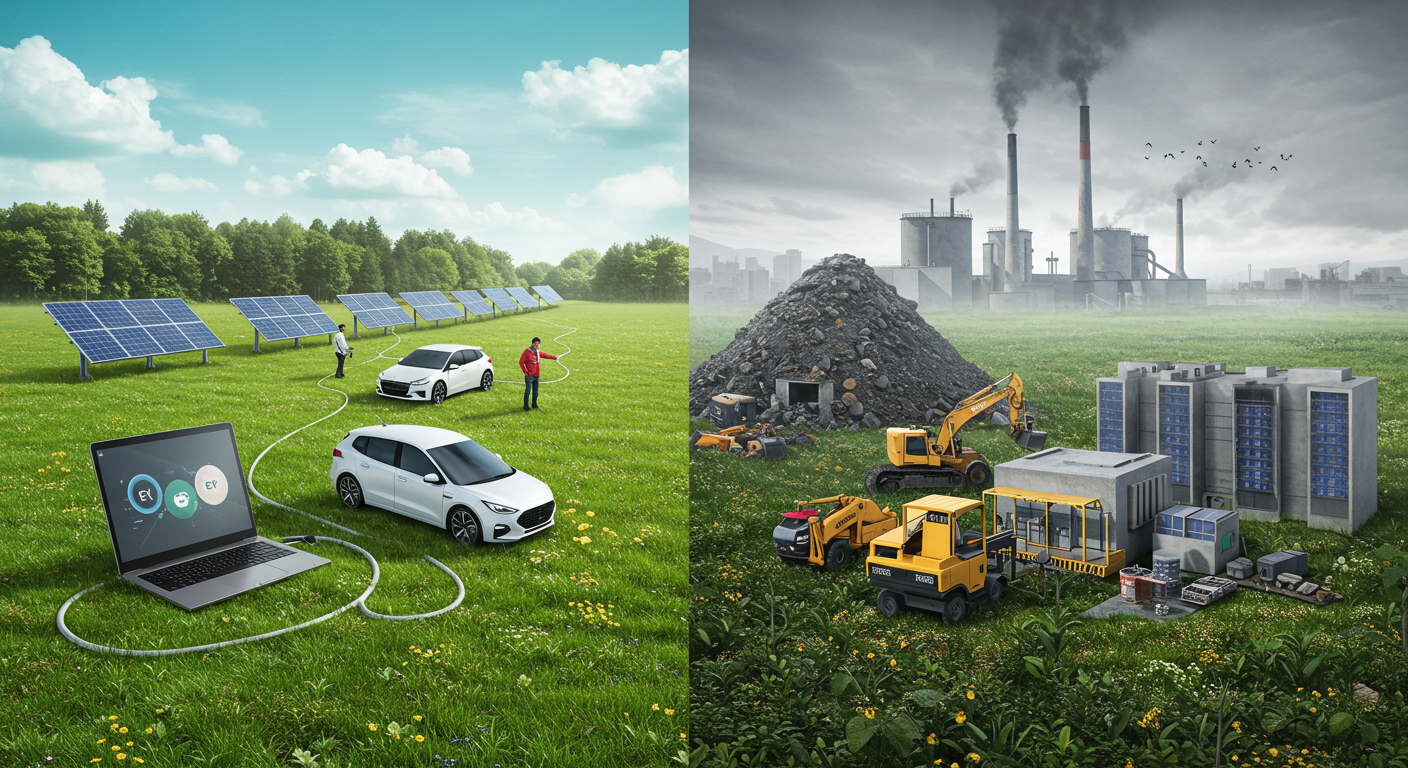
When people talk about the green side of tech, the conversation usually sounds simple. It revolves around how solar energy is good, how fossil fuels are bad, and how technology is our ticket to saving the planet. But what if that narrative only scratches the surface?
The truth is, technology sits in a delicate tension between progress and consequence. It powers climate solutions like wind farms and electric vehicles, yet it also leaves behind invisible costs such as rare-earth mineral mining and the carbon footprints of data centers. It’s a double-edged circuit board. This is where the green side of tech gets interesting and complicated.
In this piece, you won’t find generic praise for the latest gadgets. Instead, you’ll uncover eight little-known truths that expose what’s working, what’s not, and what’s being quietly ignored in the race toward sustainability. Some of these facts may surprise you; a few might even unsettle you. But all of them will help you see technology’s environmental impact with sharper, more informed eyes.
1. Green Tech Still Has a Dirty Mining Secret
At first glance, electric vehicles (EVs) and solar panels seem like the poster children for sustainability. They promise a cleaner, carbon-free future. But beneath their sleek surfaces lies a rarely discussed truth: the environmental toll of the materials that power them.
Lithium, cobalt, and rare earth elements are essential ingredients in everything from EV batteries to wind turbines. But mining these resources is anything but clean. In fact, it’s one of the most destructive aspects of the green tech supply chain.
Lithium extraction, for instance, consumes vast amounts of water. A single ton can require up to 500,000 gallons. In regions like South America’s “lithium triangle,” this has led to groundwater depletion and soil degradation, affecting local agriculture and communities. Meanwhile, cobalt, mostly sourced from the Democratic Republic of Congo, raises both environmental and ethical red flags. Reports of unsafe working conditions and child labor in artisanal cobalt mines are no longer fringe concerns. They are well-documented, persistent problems.
This is one of the eco-friendly tech myths we don’t talk about enough: just because a technology runs clean doesn’t mean it was made clean.
The green side of tech, it turns out, can cast a long shadow before the product even hits the market. While these innovations are vital for decarbonization, the extractive methods behind them are still tied to old-world industrial harm. Think deforestation, habitat destruction and toxic waste runoff.
The challenge ahead isn’t just about scaling up renewable tech. It’s about making the entire supply chain accountable. As consumers, investors, and innovators, understanding this hidden cost is essential. Because if we truly want a green revolution, it must be honest about its roots, even the ones buried deep underground.
2. Renewable Energy Isn’t Easy to Store
Solar panels on rooftops and wind turbines on hillsides are powerful symbols of the clean energy movement. But while generating renewable energy has become more efficient, storing it remains a complex and costly puzzle.
At the heart of this challenge are lithium-ion batteries, the same technology that powers everything from electric vehicles to home energy systems. Though they enable us to save surplus energy for cloudy days or still-air nights, they’re far from perfect.
Beneath the Surface
For starters, lithium-ion batteries degrade over time. With each charging cycle, their capacity diminishes, leading to reduced performance and eventual disposal. Large-scale battery farms, designed to store excess solar and wind power for grids, can experience significant energy loss, particularly in extreme temperatures or over long durations. That’s not just inefficient. It’s expensive and unsustainable.
And then there’s the environmental catch: these batteries are often made with the same problematic materials discussed earlier — lithium, cobalt, and nickel — sourced through environmentally and ethically questionable methods. Once they reach end-of-life, disposal becomes another concern. Recycling efforts for lithium-ion batteries are still limited, and improper handling can lead to chemical leaks and soil contamination.
These are the green energy storage issues that complicate what seems like a perfect solution. While renewable sources themselves are clean, their storage systems introduce a new layer of environmental strain that often goes unnoticed.
This is the paradox within the green side of tech. Progress that solves one problem while quietly creating another. Until breakthroughs in cleaner, more sustainable storage emerge, like solid-state batteries or scalable hydrogen storage, we’re forced to balance optimism with realism.
The future is electric, yes. But unless we confront the invisible weight behind energy storage, our green ambitions may end up on a very fragile charge.
3. “Clean” Data Centers Still Use Massive Energy
In the digital age, we’ve moved from smokestacks to server racks but the energy demand hasn’t disappeared. It’s just been redirected.
Tech giants like Google, Amazon Web Services (AWS), and Meta often tout their data centers as models of sustainability. And to their credit, many are powered by renewable energy and aim for carbon neutrality. But behind those ambitious headlines lies a quieter truth: these data hubs consume staggering amounts of energy, especially when it comes to cooling the servers that keep the internet alive.
Every Google search, Instagram refresh, or Netflix binge runs through a data center and collectively, they account for an estimated 1–2% of global electricity use. That may sound small until you realize it’s on par with the entire aviation industry.
The crux of the matter
The rise of artificial intelligence and crypto mining is making things worse. Training a single large AI model can generate the same carbon emissions as five cars over their entire lifetimes. Crypto mining, particularly proof-of-work blockchains like Bitcoin, demands continuous, high-performance computing that burns through terawatt-hours of electricity annually.
This is a crucial part of the green side of tech that many overlook. Digital doesn’t always mean clean.
Even companies pledging carbon offsets or using green energy can leave behind a sizable tech carbon footprint. Cooling systems rely on water or chemical refrigerants, often causing local environmental stress. And in regions where the grid is still powered by fossil fuels, “green” data centers may still be indirectly tied to dirty energy.
The green side of tech is filled with noble goals but the infrastructure that powers our online lives still has a long way to go. As demand for AI, cloud storage, and Web3 grows, so too must the urgency to rethink how we cool, power, and sustain our digital world without silently overheating the planet in the process.
4. Sustainable Devices Still Contribute to E-Waste
Every year, tech companies roll out new devices that promise to be thinner, smarter, and more sustainable. From biodegradable phone cases to laptops made with recycled aluminum, “eco-conscious” branding is everywhere. But there’s a hard truth buried beneath the buzz: even so-called green gadgets are piling up in landfills at an alarming rate.
The problem isn’t just with the materials. It’s the entire life cycle. Many modern devices, even the eco-branded ones, are notoriously difficult to repair. Batteries are sealed, components are soldered, and proprietary parts make DIY fixes nearly impossible. When something breaks, it’s often cheaper (and easier) to replace than to repair. That’s not sustainability. That’s planned obsolescence in disguise.
What Stats Say
Globally, we generate over 50 million metric tons of electronic waste every year. Yet, according to the Global E-waste Monitor, only about 20% of that is properly recycled. The rest ends up in informal dumps or exported to developing countries, where it’s dismantled under dangerous conditions, often by hand, without safety equipment.
This is one of the less glamorous realities of the green side of tech. Flashy sustainability claims can mask a throwaway culture that’s deeply embedded in the industry.
Even brands that market themselves as “green” contribute to what experts now call the green tech e-waste problem. While they may use recyclable materials or reduce packaging, they often fall short when it comes to repairability, modular design, or take-back programs.
The green side of tech should mean more than clever marketing. It should involve building products that last, that can be fixed, repurposed, and truly recycled. Until then, even our most sustainable gadgets may be little more than short-lived solutions with long-term environmental consequences.
5 The Global Supply Chain Isn’t So Green
A device might boast high energy efficiency or recycled parts, but what about how it got to you? This is where the eco-narrative often falls apart in the shadows of the global supply chain.
To assemble a single gadget, components are often sourced from multiple continents. Cobalt from Congo, lithium from Chile, chips from Taiwan, final assembly in China, and then shipping to markets in Europe or North America. Each step adds what experts call “carbon miles”, that is the cumulative emissions from transporting materials across vast distances.
This is the often-ignored side of the supply chain in green tech. The hidden emissions that make even the most energy-efficient products less green than they appear. In fact, transportation is one of the largest contributors to greenhouse gas emissions globally, and the tech industry, reliant on a web of global logistics, is deeply entangled in it.
Meanwhile, marketing teams know how to spin a good story. Labels like “climate neutral,” “eco-smart,” or “zero emissions” rarely reflect the full environmental cost. This is where greenwashing becomes a problem. Companies may highlight a single sustainable feature while ignoring emissions from global shipping, outsourced manufacturing, or energy-intensive production processes.
Again, the green side of tech reveals another uncomfortable truth: a product can be green in design but dirty in delivery.
The solution isn’t simple. Localizing supply chains, improving transparency, and holding companies accountable for full lifecycle emissions are all steps in the right direction. But until then, many of the eco-friendly gadgets we celebrate are riding on a logistics network that’s far from sustainable.
To truly understand the green side of tech, we must look beyond the product and examine the global web that brought it to life.
6. Greenwashing Is Rampant in Tech Marketing
Walk through any electronics store whether physical or digital and you’ll see words like eco, sustainable, or carbon-neutral plastered across product descriptions. It feels reassuring, even inspiring. But many of these claims are more marketing than meaningful action.
This practice, known as greenwashing in tech, has become increasingly common as consumers demand more ethical, environmentally friendly products. But without regulation or standard definitions, these terms are often vague, unverifiable, or downright misleading. A company might use recycled plastic for 5% of a device’s outer shell and then go on to advertise the whole product as “green.” Or it might purchase carbon offsets while continuing to operate on fossil-heavy grids.
This is one of the murkiest aspects of the green side of tech. The public sees sleek ad campaigns. What’s often hidden are the true environmental costs, the lack of transparency, or the trade-offs made behind the scenes.
So how can consumers separate fact from fiction?
Third-party certifications are a good place to start. Programs like Energy Star, EPEAT, or devices like the Fairphone offer more verifiable sustainability standards, evaluating everything from energy use to supply chain ethics. These aren’t perfect, but they provide a layer of accountability that branding alone can’t offer.
The truth is, we’ve reached a point where saying “sustainable” isn’t enough. Brands must show it. Transparency reports, repairability scores, recyclable packaging, and real emissions tracking should become the norm, not the exception.
Until then, it’s up to us, the consumers, developers, investors, to ask the harder questions and demand more than just green labels. Because the green side of tech shouldn’t be a marketing strategy. It should be a measurable, authentic commitment to a future that’s not just innovative, but truly responsible.
7. Some Green Innovations Are Actually Making a Difference
Not all green tech claims are smoke and mirrors. While greenwashing is widespread, a growing number of innovators are proving that real sustainability in tech isn’t just possible but it’s already happening.
Take modular devices like the Framework Laptop. Unlike conventional notebooks sealed tight and doomed to obsolescence, Framework is designed to be taken apart, upgraded, and repaired with ease. Need a new keyboard? Swap it out. Cracked your screen? Replace just that part. It’s a radical shift from disposable design, and it prioritizes longevity over repeat sales.
Then there are biodegradable PCBs (printed circuit boards), a promising innovation aiming to reduce the toxic e-waste generated when traditional electronics are discarded. Early prototypes show these boards can break down safely, eliminating long-term pollution from metals and flame retardants.
Even simpler innovations are having a measurable impact. Portable solar chargers are helping rural communities access clean energy off-grid, reducing reliance on diesel generators or kerosene lamps. In urban areas, they offer a sustainable way to power small devices, especially during outages or emergencies.
What sets these efforts apart?
They come from sustainable tech companies that align profit with purpose. Brands like Fairphone, Framework, and Back Market aren’t just selling gadgets. They’re challenging an industry to think differently. Some tech giants are also stepping up, investing in circular design, carbon-negative data centers, or regenerative materials.
These examples reflect a brighter side of the green side of tech. One that is grounded in engineering, transparency, and innovation. They remind us that while tech’s environmental impact is real and complex, it’s not an unsolvable problem.
In a space often crowded with empty claims, these breakthroughs are evidence that meaningful change is already in motion. And the more we support these ideas, the more pressure we place on the rest of the industry to catch up. Not just in talk, but in tangible action.
8. You Can Influence the Future of Green Tech
It’s easy to feel powerless in the face of climate change and global tech giants. But the truth is, you have more influence than you think.
Every time you choose a repairable device over a flashy upgrade, support a local technician instead of tossing your phone, or ask where and how a product was made, you send a message. These are signals that shape demand, drive innovation, and push companies toward accountability.
One of the most overlooked ways to shape the green side of tech is by asking harder questions. Is this company transparent about its supply chain? Does this product come with end-of-life recycling options? Can it be repaired or upgraded instead of replaced? These questions disrupt the cycle of blind consumption and greenwashed marketing and they matter more than ever.
Supporting open-source platforms, modular hardware, and ethical brands is part of a growing movement toward tech that values sustainability as much as performance. Crowdfunding sustainable startups, engaging with environmental tech initiatives, and even choosing refurbished products are powerful examples of how to support green tech in everyday life.
There’s also strength in collective pressure. When communities advocate for right-to-repair laws or demand more sustainable corporate practices, companies often respond. Not out of goodwill, but because public opinion affects profit.
This is perhaps the most hopeful part of the green side of tech. It is still being written. And it is not just up to engineers or CEOs. It is a story shaped by all of us.
The next time you see a new gadget, don’t just ask, “What can it do?” Ask, “What did it cost — and who paid for it?” That shift in mindset is where real change begins.
Bottom line…
Green tech holds incredible promise but as we’ve discussed, that promise comes with caution. From the hidden costs of mining and manufacturing to misleading labels and global logistics, it’s clear that innovation alone won’t save the planet unless it’s paired with responsibility and transparency.
The more we understand, the more impact we can make. As consumers, creators, and citizens, our choices shape the direction of technology. Whether it’s opting for modular gadgets, demanding ethical supply chains, or challenging brands on vague claims, we each have a role to play in building a truly sustainable future.
