


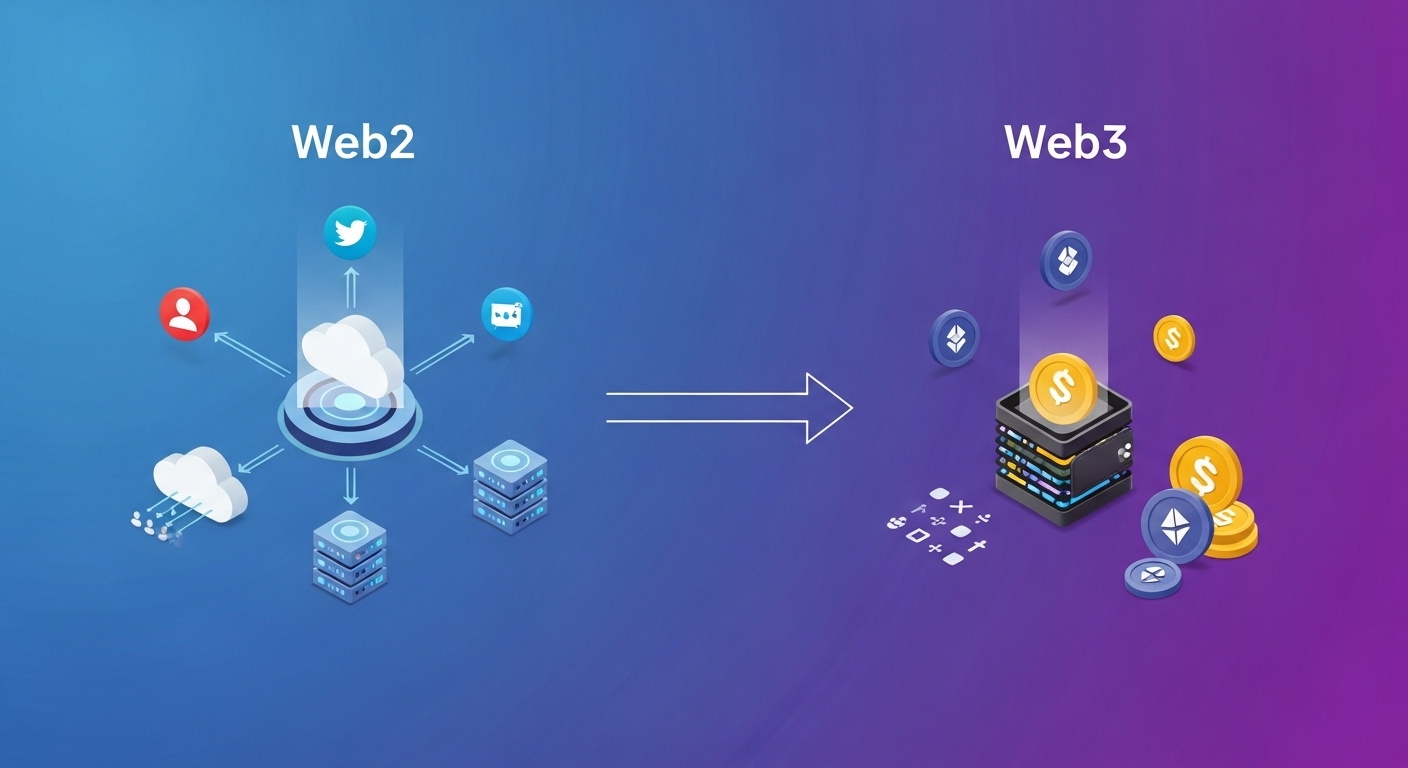
The internet is evolving again. After two decades of Web2 dominating our digital lives, a new version, Web3, is being talked about with bold promises of decentralization, ownership, and control. But what does that really mean? What are the key Web3 versus Web2 differences?
Web2 gave us social media, e-commerce, and streaming platforms that shaped how we connect and create. It turned the web into a global community but kept most control in the hands of large companies. Web3 aims to shift that power back to users through blockchain technology, smart contracts, and digital tokens. It wants to create a web where people own their data and identity instead of renting space on centralized platforms. Still, not everything is changing. Many core web standards, tools, and experiences remain familiar. The transition is not a complete restart but an evolution.
See Also: What web3 was meant to be
What Is Web2 About?
Web2 is the version of the internet most people know today. It began around the early 2000s when websites became interactive instead of static. Users could post, comment, and share—turning the web from a place to read into a place to participate. This shift powered the rise of platforms like Facebook, YouTube, Twitter, and Amazon. [Web 2.0 principles]
At its core, Web2 runs on centralized systems. Data is stored and managed by large companies that control the platforms. In exchange for free access, users give up data, which fuels advertising and personalization. This model made the web more convenient but also more dependent on a few major players. Web2 also shaped how businesses grow online. APIs, cloud services, and mobile apps helped companies reach global audiences faster than ever. Yet, these same tools created barriers to ownership—users don’t truly control their data, and creators depend on platform algorithms for visibility.
In short, Web2 made the internet social, scalable, and profitable, but it also concentrated power. This structure set the stage for Web3’s rise, where decentralization aims to balance innovation with user control.
What Is Web3?
Web3 is the next stage of the internet. It is considered an evolution built on the idea of decentralization. Instead of large companies owning data and platforms, Web3 uses blockchain technology to distribute control among users. Every transaction, file, or digital asset is verified and stored across many computers, making the system more transparent and harder to manipulate.
In Web3, ownership is a central theme. Users can hold digital assets such as cryptocurrencies, NFTs, and tokens that represent value or access. Smart contracts—self-executing agreements coded on the blockchain—enable people to exchange goods, services, or rights without middlemen. This model promotes trust through code rather than corporate control.
Web3 also introduces new ways to build and interact online. Decentralized applications (dApps) run on peer-to-peer networks, giving users more privacy and autonomy. Communities form around shared governance using tokens for voting and decision-making.
Although it is still developing, Web3 represents a shift toward an open, user-owned web. It is about a fairer digital economy where identity, content, and value belong to individuals, not platforms.
Key Web3 versus Web2 Differences
Understanding the key Web3 versus Web2 differences is fundamental to seeing how the internet is evolving. While both aim to connect people and share information, they operate on completely different models. Web2 relies on centralized servers and platforms, while Web3 distributes control through blockchain networks. This core change reshapes everything—from data ownership to digital identity.
One major difference between Web3 and Web2 lies in who owns the data. In Web2, user information is stored and monetized by companies. Web3 flips that model, giving users direct control over their data and digital assets through wallets and cryptographic keys. This shift creates a more transparent and secure environment for users and creators alike.
Another key point in the Web3 vs Web2 comparison is governance. Web2 platforms are managed by corporations, while Web3 communities use decentralized voting systems, known as DAOs (Decentralized Autonomous Organizations). These allow people to influence the direction of a project rather than relying on a single company.
Lastly, Web3 introduces token-based economies that reward participation and ownership instead of engagement alone. It’s not just about using the web. It is also about being part of it.
Comparison Table
| Category | Web2 (Current Internet) | Web3 (Next-Generation Internet) |
| Architecture | Centralized — controlled by large companies and servers | Decentralized — powered by blockchain and distributed nodes |
| Data Ownership | User data stored and monetized by platforms | Users own and control their data using digital wallets |
| Identity | Managed by third-party logins and platforms | Self-sovereign identity tied to blockchain credentials |
| Governance | Controlled by corporations and platform policies | Managed by communities through DAOs and smart contracts |
| Monetization Model | Ad-driven and platform-based | Tokenized ecosystems that reward participation and creation |
| Content Hosting | Stored on private servers | Distributed across peer-to-peer networks (IPFS, blockchain) |
| Security | Relies on centralized cybersecurity and trust in companies | Built on cryptography and decentralized verification |
| Innovation Speed | Rapid but limited by corporate control | Open innovation through public code and community governance |
| User Interaction | Passive participation — users consume and share | Active participation — users own, trade, and build |
| Examples | Facebook, YouTube, Amazon, Twitter | Ethereum, Polkadot, Arweave, Lens Protocol |
What’s Not Changing? (What Remains from Web2 in Web3 Era)
Despite the hype around decentralization, not everything will change as we move from Web2 to Web3. Many core elements of the internet will remain familiar, ensuring stability and continuity for users and developers alike.
First, the foundational web protocols—such as HTTP, HTML, and TCP/IP—will continue to power communication between devices. Web3 builds on these same standards rather than replacing them, which allows for compatibility between old and new systems.
Second, user interfaces will still look and feel much like they do today. People will browse, click, and scroll through websites or apps, even if the data comes from decentralized networks. This consistency makes the transition smoother and helps with mass adoption.
Third, security fundamentals such as encryption, authentication, and HTTPS will stay in place, although enhanced with blockchain features like cryptographic verification.
Lastly, developer tools and workflows—frameworks, APIs, and coding languages—will evolve but not disappear. Many developers are already integrating Web3 elements into Web2 systems, creating hybrid environments rather than total replacements.
Hybrid and Transitional Use Cases & Overlaps
The shift toward a decentralized web isn’t happening overnight. In many areas, Web3 versus Web2 differences blur as both technologies coexist and complement each other. Businesses, developers, and users are finding practical ways to merge the strengths of both models.
One clear example of Web3 versus Web2 differences working together is in blockchain-based applications that use traditional Web2 interfaces. A user might log in through a familiar Web2-style dashboard while the backend runs on a Web3 network powered by smart contracts. This approach makes the experience intuitive without sacrificing decentralization.
Another bridge appears in social media and content platforms. Projects like Lens Protocol or Mirror combine Web3 ownership principles with the community features of Web2. Users can publish, share, and monetize content through tokens, all while keeping the smooth user experience they expect from existing Web2 systems.
E-commerce also highlights the Web3 versus Web2 differences through hybrid adoption. Online stores are beginning to accept cryptocurrency payments while maintaining traditional checkout systems.
These overlaps prove that Web3 isn’t a total replacement for Web2—it’s an expansion. The most successful digital ecosystems will likely blend both, using decentralization where it adds value while keeping what already works.
See Also: How to earn from web3 with no money invested
Challenges and Risks in Transition
While the move from Web2 to Web3 offers exciting possibilities, it also brings serious challenges that could slow adoption. Understanding these risks is crucial to navigating the Web3 versus Web2 differences effectively.
The first challenge is scalability. Web3 systems run on decentralized networks, which can process fewer transactions per second compared to centralized Web2 platforms. Until scalability improves, mass adoption will remain limited.
User experience (UX) is another hurdle. Many Web3 applications still require technical knowledge—like managing wallets, private keys, or gas fees—which makes them less accessible to everyday users accustomed to simple Web2 logins.
Next, there’s regulatory uncertainty. Governments around the world are still defining how to classify cryptocurrencies, tokens, and decentralized organizations. This lack of clarity creates risk for businesses trying to integrate Web3 features.
Security also changes in this new model. While blockchain adds transparency, users face new responsibilities—losing a private key can mean losing assets permanently, with no recovery options.
Lastly, interoperability and awareness remain limited. Many Web3 systems don’t yet communicate seamlessly, and mainstream users are still learning the basics of decentralization.
Despite these challenges, progress is steady. With better infrastructure, education, and governance, the transition between Web2 and Web3 will continue to mature.
Practical Implications for Businesses and Users
Understanding the Web3 versus Web2 differences helps businesses and users make smarter decisions about where to invest time and resources. This transition isn’t just technological—it’s strategic, changing how value, ownership, and engagement work across the internet.
For businesses, the rise of Web3 introduces new ways to build trust and loyalty. Companies can integrate blockchain features such as tokenized memberships, digital collectibles, and transparent supply chains. These tools enhance credibility and offer users real ownership instead of access controlled by platforms. However, businesses must also balance innovation with regulation and ensure that their Web3 integrations remain user-friendly and compliant.
For users, the difference between Web3 and Web2 is about empowerment. Web2 platforms collect and control personal data, while Web3 applications allow individuals to decide how their data is shared or monetized. This shift gives users greater autonomy and privacy, but it also adds responsibility for security and key management.
In the Web3 vs Web2 comparison, the advantage lies in hybrid adoption. Organizations that gradually blend decentralized features with existing Web2 systems can enjoy innovation without disrupting their core operations.
Final Thoughts
The journey from Web2 to Web3 marks one of the most significant shifts in internet history. Still, the two worlds will continue to overlap. Many systems will stay hybrid, blending Web2 usability with Web3’s transparency and control. Businesses that adapt to this dual reality will have a competitive edge, building credibility with both regulators and users who value privacy and authenticity.
Looking ahead, the difference between Web3 and Web2 will keep evolving as technology matures. New standards, tools, and interfaces will make Web3 more accessible and practical. The future web will likely be defined not by competition but by collaboration—an ecosystem where decentralization and convenience work together.
Frequently Asked Questions
1. What is the main difference between Web3 and Web2?
The key difference between Web3 and Web2 lies in ownership and control. Web2 is centralized—platforms like Google, Facebook, and Amazon manage and profit from user data. Web3, built on blockchain technology, decentralizes control so that users own their data, digital assets, and online identity.
2. Is Web3 replacing Web2?
Not entirely. Web3 isn’t a full replacement but an evolution. Many experts believe the internet’s future will be hybrid, combining Web2’s convenience with Web3’s transparency and user ownership.
3. What are some examples of Web3 applications?
Examples include Ethereum, Polkadot, Arweave, and decentralized social networks like Lens Protocol and Mirror. These projects use blockchain and tokens to enable trustless transactions and community-driven governance—key Web3 versus Web2 differences in action.
4. What stays the same from Web2 to Web3?
Core technologies such as HTTP, HTML, and TCP/IP remain foundational. Web3 builds on existing internet infrastructure, improving ownership and interaction rather than starting from scratch.
5. How can businesses prepare for Web3?
Companies should start by learning about blockchain, tokenization, and decentralized applications. Gradual adoption—like integrating crypto payments or NFTs—lets brands explore Web3 benefits while maintaining stable Web2 operations.

3 Comments
Every time I visit your website, I’m greeted with thought-provoking content and impeccable writing. You truly have a gift for articulating complex ideas in a clear and engaging manner.
Thank you so much.
Normally I do not read article on blogs however I would like to say that this writeup very forced me to try and do so Your writing style has been amazed me Thanks quite great post